Aussie Beef vs American Beef: What Is Actually Different?
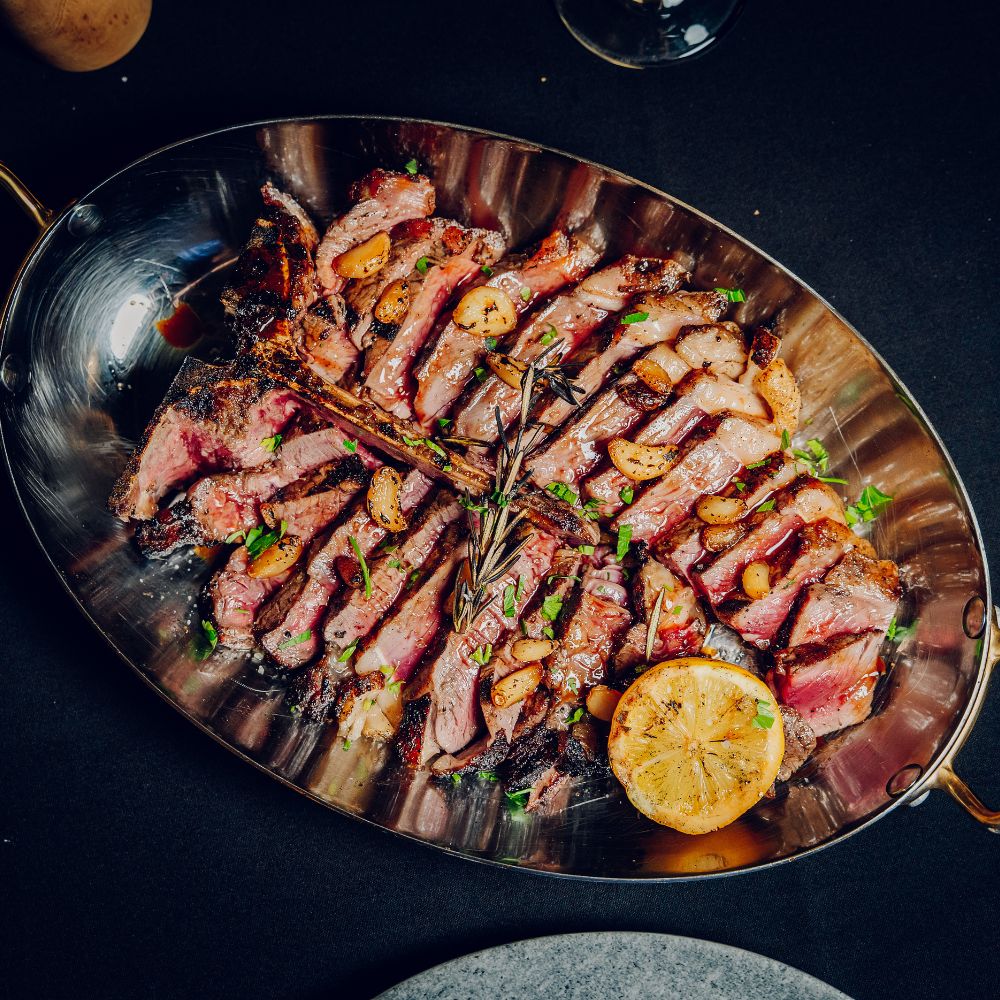
Same animal, different country, and a surprisingly different steak. Here is how Australian and American beef compare on feed, grading, flavour and even the names on the menu.
Order a rib eye in New York and a scotch fillet in Sydney and you are eating the same muscle. It will still taste different. The difference starts in the paddock, carries through the grading system, and ends with two countries that cannot agree on what to call a sirloin.
The short answer
Most American beef is grain-finished in a feedlot, which gives it heavy marbling and a rich, buttery flavour. A large share of Australian beef is raised on pasture, which gives a leaner steak with a deeper, beefier, slightly mineral taste. Australia also produces a lot of grain-fed beef, and some of the best marbled beef in the world, so the real answer is that Australia gives you the choice.
Grass-fed vs grain-fed
American beef is mostly grain-finished. Cattle spend their last months in a feedlot on a corn-based ration, which builds intramuscular fat quickly. The result is soft, well marbled meat with white fat and a sweet, buttery flavour.
Australian beef has the space for pasture. Grass-fed cattle grow more slowly and move more, so the meat is leaner, the fat is often a creamier yellow, and the flavour is stronger and more savoury. Australian grain-fed beef is usually sold by the number of days on grain, such as 100, 150 or 200-plus days, and the longer the feed, the more marbling.
Neither is better. A grass-fed rump has more flavour per bite; a long grain-fed scotch fillet is richer and more tender. It comes down to what you like.
How the beef is graded
The United States uses USDA grades, mostly Prime, Choice and Select. The grade is driven largely by marbling and the age of the animal. Prime is the top grade and only a small share of beef reaches it.
Australia uses two systems side by side. AUS-MEAT describes the carcass, including a marble score. Meat Standards Australia (MSA) is an eating-quality system: instead of grading only on fat, it predicts how tender, juicy and flavoursome a specific cut will be, using factors like breed, how the animal was handled, and how the meat was aged. That means a grass-fed steak with modest marbling can still earn a high MSA eating-quality score.
For wagyu, both countries use a marble score, where the higher the number, the more fat runs through the meat.
Same steak, different name
This is where most people get caught out reading a menu overseas. The cuts are the same muscles; the names are not.
| In Australia | In the United States | Our guide |
|---|---|---|
| Scotch fillet | Rib eye (boneless) | Scotch fillet |
| Rib eye on the bone | Bone-in rib eye, cowboy steak | Rib eye on the bone |
| Sirloin (porterhouse) | New York strip, strip steak | Sirloin |
| Eye fillet | Tenderloin, filet mignon | Eye fillet |
| Rump | Top sirloin | Rump |
| T-bone | T-bone, or porterhouse when the fillet side is larger | T-bone |
| Tomahawk | Tomahawk | Tomahawk |
| Skirt and flank | Skirt and flank | Skirt, flank |
| Brisket | Brisket | Brisket |
| Short rib | Short rib | Short rib |
The biggest trap is porterhouse. In Australia it means a boneless sirloin. In America it means a big T-bone with a generous piece of fillet attached. Order one in each country and you will get two very different plates.
How they taste
American grain-fed: rich, sweet and buttery, very soft, with fat that melts as it cooks. Best for people who like a melt-in-the-mouth steak.
Australian grass-fed: beefier and more savoury, with a firmer bite and a cleaner finish. Best for people who want to taste the beef rather than the fat.
Australian grain-fed and wagyu: marbling to match or beat a USDA Prime steak, depending on the days on grain and the marble score.
Hormones and traceability
Both countries permit hormone growth promotants, and both have rules on how they are used. Australian beef exported to the European Union must come from cattle raised without them.
Australia also tags its cattle through the National Livestock Identification System (NLIS), which tracks an animal through its life, one reason Australian beef is trusted in export markets around the world.
How to cook each one
Lean grass-fed steak cooks faster and dries out sooner, so take it off the heat a little earlier and serve it no further than medium rare. Heavily marbled grain-fed steak can take a touch more heat, because the fat needs time to melt. The steak temperature chart has the exact numbers, and the steak guide covers every cut.
So which is better?
It depends on your plate. If you love richness, go grain-fed. If you love flavour, go grass-fed. The good news in Sydney is that you do not have to fly anywhere to find out: Australian beef gives you both, and the best way to decide is to try them side by side.
Want to taste the difference? Our steaks are cooked over charcoal at Elements Bar and Grill Pyrmont and Walsh Bay, with smoked beef at Elements Smokehouse. Check each venue’s menu for what is on, see the steak specials, or Book Now.
Frequently asked
Is Australian beef better than American beef?
Neither is simply better. American beef is mostly grain-finished, so it is richer and more marbled. Much Australian beef is grass-fed, so it is leaner with a beefier flavour, and Australia also produces grain-fed and wagyu beef with heavy marbling.
Is Australian beef grass-fed?
A large share is, because Australia has the pasture for it. Australia also produces a lot of grain-fed beef, usually labelled by days on grain, such as 100 or 150 days.
What is a scotch fillet called in America?
A rib eye. A scotch fillet is a boneless rib eye steak.
What is the difference between USDA and MSA grading?
USDA grades such as Prime, Choice and Select are based mainly on marbling and the age of the animal. MSA, Meat Standards Australia, predicts the eating quality of each cut, including tenderness, juiciness and flavour.
Is a porterhouse the same in Australia and America?
No. In Australia a porterhouse is a boneless sirloin. In America it is a large T-bone with a bigger piece of fillet.