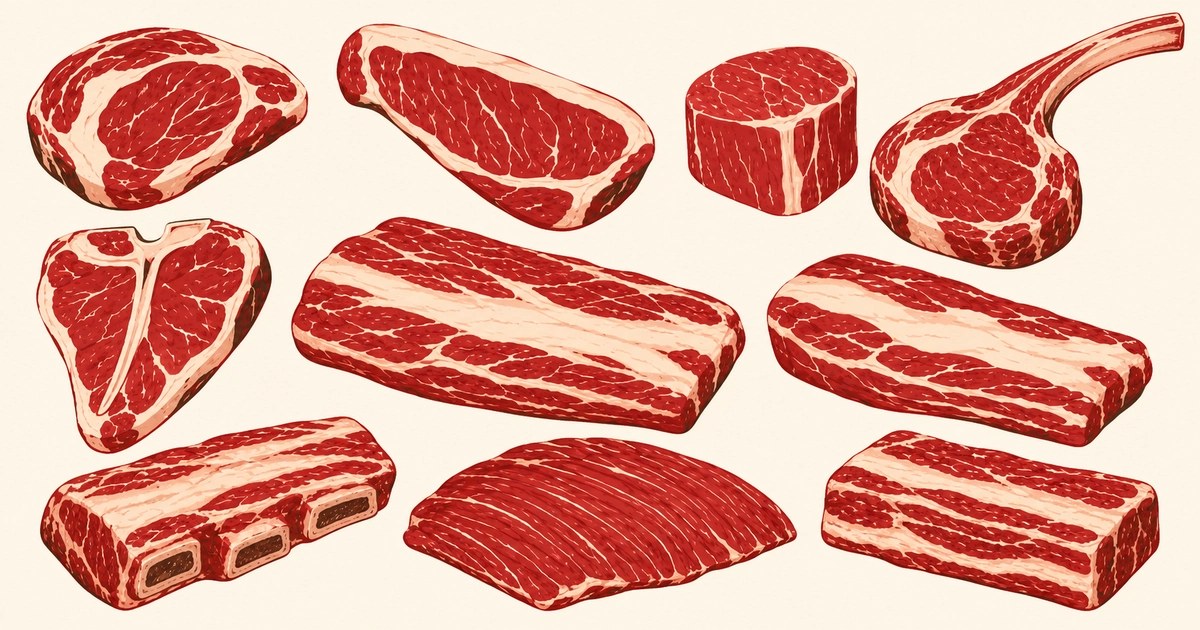
Steak cuts, explained
Where every steak comes from, what else it is called, and how to cook it.
Tap a section, or a cut above, to see where it comes from.
Chuck
The shoulder. Hard working muscle and rich flavour, where the short ribs begin.
Rib
The richest marbling on the animal, and the home of the scotch fillet.
Striploin
Along the back. Firm, beefy steaks with a fat cap down one edge.
Tenderloin
Tucked under the loin, doing almost no work. The most tender cut there is.
Rump
The hip. Big beef flavour for the price, and a favourite on the grill.
Plate
Below the ribs. Loose grained, intensely flavoured and quick to cook.
Flank
The belly behind the plate. Lean, long grained steaks made for a marinade and a hot grill.
Round
The hind leg. Lean, hard working muscles such as topside and silverside, used for roasts and corned beef.
Shank
The hind leg from below the round to the knee. Very lean and tough, so it is slow cooked or minced rather than served as a steak.
Steak cut names in Australia, the UK and the US
The same steak can have three names depending on where you order it. A British sirloin is an American strip steak, and an American sirloin is closer to an Australian rump.
| Australia | United Kingdom | United States |
|---|---|---|
| Eye fillet | Fillet | Tenderloin, filet mignon |
| Scotch fillet | Rib eye | Ribeye |
| Rib eye on the bone | Bone in rib eye | Bone-in ribeye, cowboy steak |
| Sirloin, porterhouse | Sirloin | New York strip, strip steak, Kansas City strip |
| Rump | Rump | Top sirloin |
| T-bone | T-bone | T-bone, porterhouse |
| Skirt | Skirt | Skirt steak |
| Oyster blade | Flat iron, butler’s steak | Flat iron |
| Flank | Flank, bavette | Flank steak, London broil |
Other beef cuts you may come across
Oyster blade, or flat iron: a marbled, surprisingly tender steak from the shoulder, sold cheaply once the tough centre sinew is removed.
Flank, or bavette: a lean steak from the belly muscles behind the plate, more flavour than tenderness, best marinated and sliced thin.
Hanger: a single, loosely grained muscle hanging below the diaphragm, rich in flavour and quick to cook.
Picanha: the rump cap with its fat layer left on, a Brazilian favourite that sits on top of the rump.
Round, topside and silverside: lean muscles from the hind leg, roasted, sliced thin or cured into corned beef rather than grilled as steaks.
Shank: the lower leg. Lean but very tough, so it is slow cooked or minced rather than served as a steak.
Wagyu and Angus steak
Wagyu and Angus are breeds, not cuts, so any cut on the cow can be wagyu or Angus. Wagyu beef comes from Japanese cattle breeds known for fine, heavy marbling. In Australia it is graded on the MB scale from MB0 to MB9, and Japanese A5 is the top grade in Japan. A wagyu sirloin, wagyu scotch fillet or wagyu brisket is richer and more tender than the same cut from other breeds.
Angus beef comes from Black Angus cattle, the most common premium breed in Australia, with reliable, moderate marbling and a classic beef flavour. Angus scotch fillet, Angus rib eye and Angus tomahawk are steakhouse staples, from both grass fed and grain fed herds.
Wagyu or Angus? Choose wagyu for richness and melt in the mouth tenderness in a smaller portion. Choose Angus for a bigger, beefier steak with a firmer bite.
How cooked should a steak be?
Temperatures are taken in the thickest part, after resting. Take the steak off the heat a few degrees early, because it keeps cooking as it rests.
| Doneness | Centre | Suits |
|---|---|---|
| Rare | About 50°C | Eye fillet |
| Medium rare | About 55°C | Most grilling steaks |
| Medium | About 60°C | Well marbled cuts like scotch fillet |
| Medium well | About 65°C | Personal preference |
| Well done | 70°C and above | Personal preference |
Lean cuts such as eye fillet and rump suffer most when overcooked. Fattier cuts such as scotch fillet forgive a little more, because the marbling keeps them moist. Brisket, short rib and beef back ribs are the exception: they are cooked until tender, not to a temperature.
How to choose a steak
For tenderness, go to the muscles that do the least work: the eye fillet first, then the scotch fillet and the T-bone.
For flavour, go to marbling or to working muscle: the scotch fillet, skirt and rump all carry more beef taste than the fillet.
For both on one plate, order a T-bone, which carries a striploin and an eye fillet either side of the bone.
For a table to share, a tomahawk is the centrepiece, and brisket, short rib and beef back ribs are the slow cooked alternatives.
Frequently asked
What is the most tender cut of steak?
The eye fillet, cut from the tenderloin. The muscle does almost no work, which keeps it exceptionally tender, though it is also lean and mild.
What is the most flavourful steak?
Well marbled and working cuts carry the most flavour. Scotch fillet, skirt and rump all taste beefier than eye fillet.
Is sirloin the same as porterhouse in Australia?
Yes. In Australia the striploin steak is sold as sirloin and also as porterhouse. An American porterhouse is a different, bone-in cut.
What is the difference between a T-bone and a porterhouse?
In Australia a T-bone carries a striploin and an eye fillet on one bone, while porterhouse is another name for sirloin. In the US, porterhouse is a T-bone with a larger fillet.
What doneness should I order my steak?
Medium rare suits most grilling steaks. Lean cuts are best no further than medium rare, while well marbled cuts can go to medium.