Cabernet and Shiraz blends
Dark fruit, cassis, spice and a firm finish.
The best of both: shiraz fruit, cabernet structure. A very Australian bottle for the middle of the table.
What Cabernet and Shiraz blends tastes like
Dark fruit, cassis, spice and a firm finish. Body: full. Tannin: high. Acidity: medium.
Where Cabernet and Shiraz blends comes from
Blending cabernet and shiraz is a very Australian tradition. In Bordeaux cabernet is blended with merlot, cabernet franc and petit verdot; in Australia winemakers found that shiraz fills cabernet’s mid-palate with ripe fruit.
Styles to look for
Cabernet shiraz blends, shiraz cabernet blends, and Bordeaux-style blends with merlot and petit verdot.
Food it suits
Roasts, pies, slow-cooked meats and a cheese board.
How to serve it
Serve slightly below room temperature, around 14 to 18°C. Lighter reds sit at the cooler end, fuller reds at the warmer end.
Worth knowing
The grape named first on an Australian blend label is the one there is more of.
Check the menu at your venue
Wine lists change with the season and the supplier, and each venue pours its own. Check the menu before you go, or ask your waiter what is open by the glass.
Want to browse other types of wine?
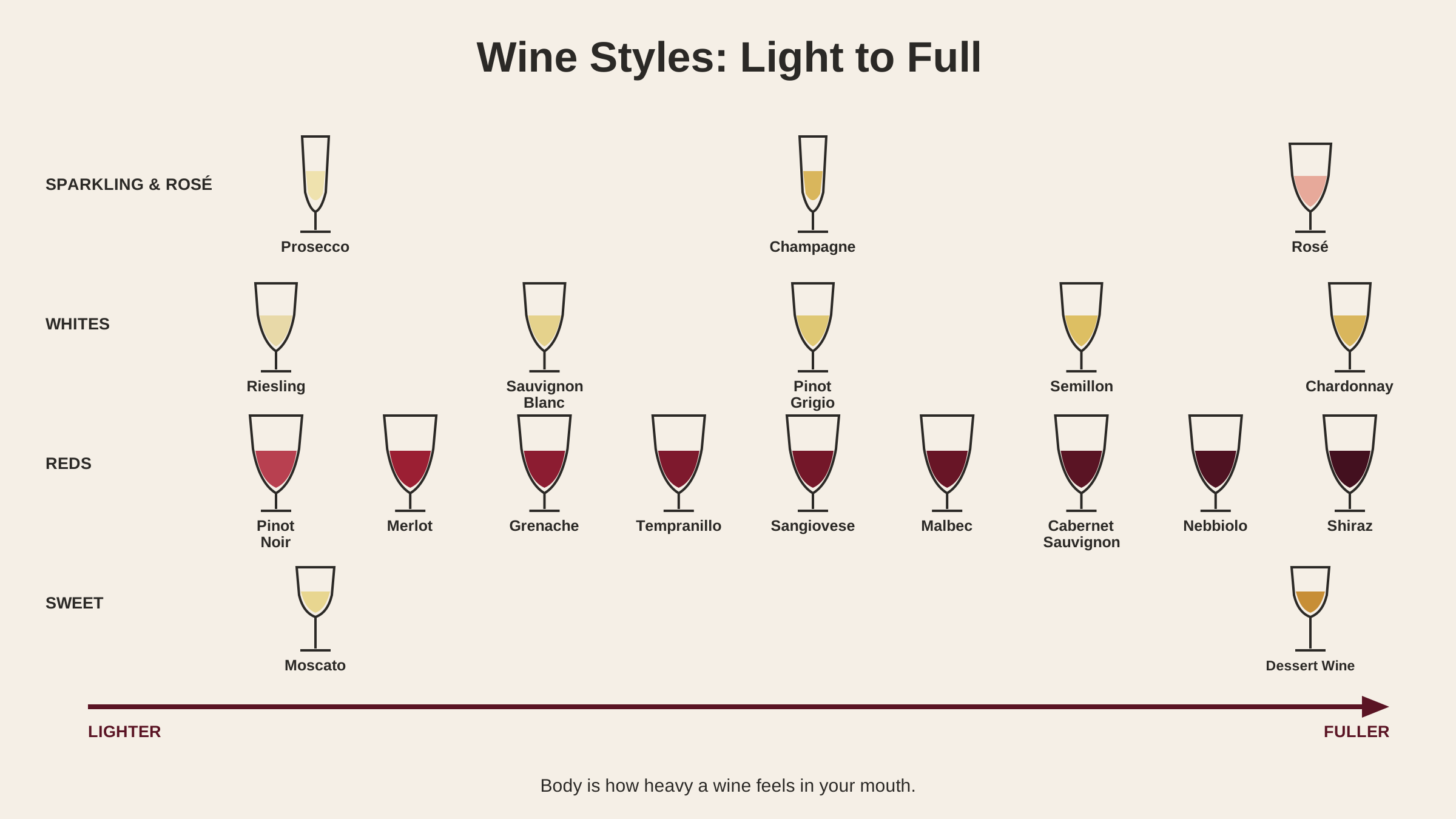
Tap any glass to jump to that wine, or go back to the full wine guide.
Frequently asked
What does Cabernet and Shiraz blends taste like?
Dark fruit, cassis, spice and a firm finish. Body: full. Tannin: high. Acidity: medium.
Where does Cabernet and Shiraz blends come from?
Blending cabernet and shiraz is a very Australian tradition. In Bordeaux cabernet is blended with merlot, cabernet franc and petit verdot; in Australia winemakers found that shiraz fills cabernet’s mid-palate with ripe fruit.
What food goes with
Roasts, pies, slow-cooked meats and a cheese board.
How should Cabernet and Shiraz blends be served?
Serve slightly below room temperature, around 14 to 18°C. Lighter reds sit at the cooler end, fuller reds at the warmer end.