Dessert and fortified
Honey, apricot, raisin, toffee.
A late-harvest riesling for fruit desserts, and a 12 year old muscat for chocolate and cheese.
What Dessert and fortified tastes like
Honey, apricot, raisin, toffee. Body: full. Acidity: medium.
Where Dessert and fortified comes from
Sweet wines are made by concentrating the sugar in the grapes. Late harvest wines are picked late in the season; botrytis wines use noble rot, a mould that shrivels the grapes. Fortified wines have grape spirit added. Australia is known for Rutherglen muscat and topaque and for botrytis semillon.
Styles to look for
Late harvest and winter harvest riesling are fresh and fruity. Botrytis wines are rich and honeyed. Fortified muscat is dark, with raisin and toffee, and is aged for years in barrel.
Food it suits
Fruit tarts, crème brûlée, chocolate, blue cheese and nuts.
How to serve it
Serve well chilled, around 6 to 8°C, in a smaller glass.
Worth knowing
The age statement on a fortified muscat, such as 12 years, reflects the average age of the wines in the blend.
Check the menu at your venue
Wine lists change with the season and the supplier, and each venue pours its own. Check the menu before you go, or ask your waiter what is open by the glass.
Want to browse other types of wine?
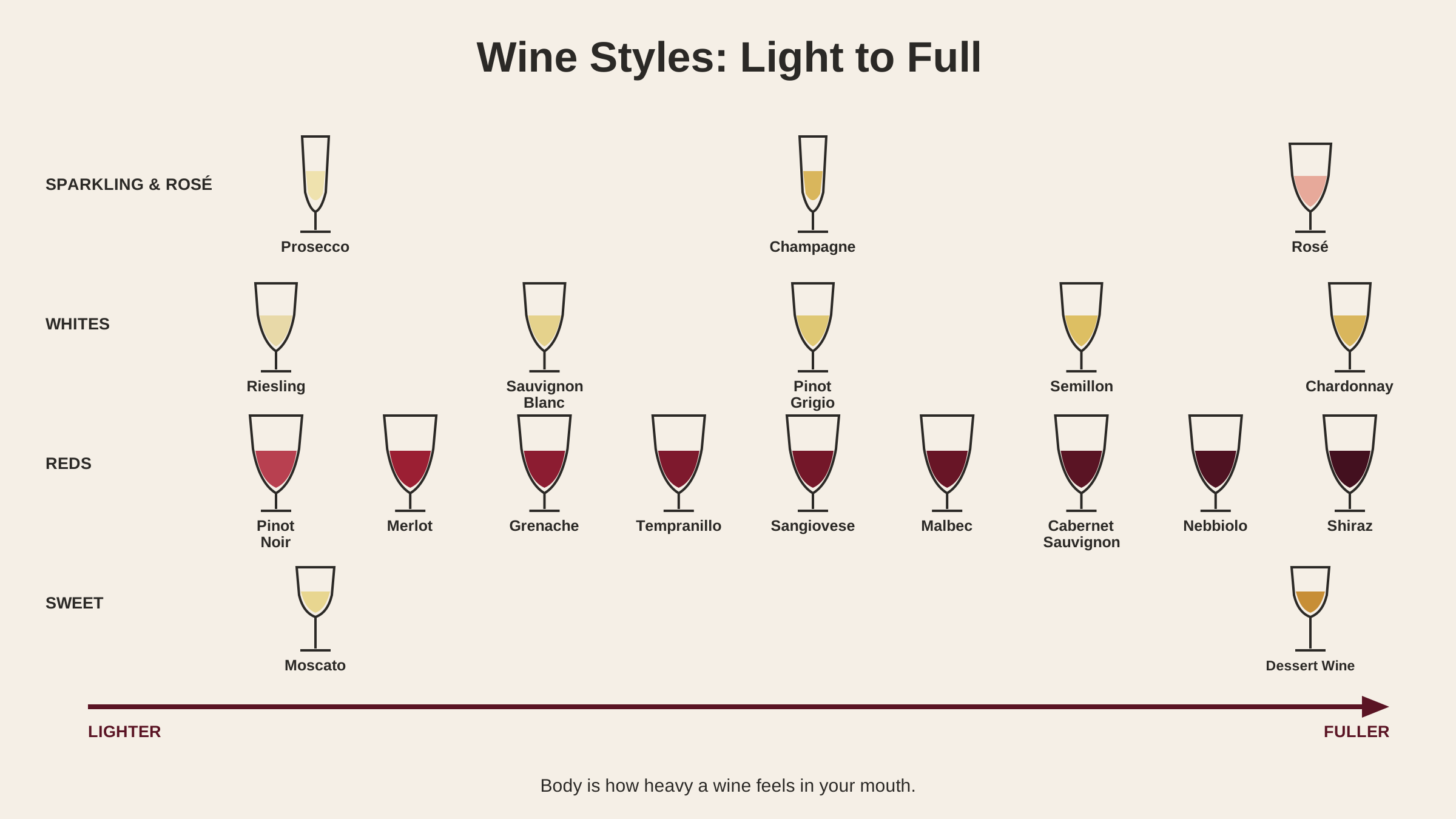
Tap any glass to jump to that wine, or go back to the full wine guide.
Frequently asked
What does Dessert and fortified taste like?
Honey, apricot, raisin, toffee. Body: full. Acidity: medium.
Where does Dessert and fortified come from?
Sweet wines are made by concentrating the sugar in the grapes. Late harvest wines are picked late in the season; botrytis wines use noble rot, a mould that shrivels the grapes. Fortified wines have grape spirit added. Australia is known for Rutherglen muscat and topaque and for botrytis semillon.
What food goes with
Fruit tarts, crème brûlée, chocolate, blue cheese and nuts.
How should Dessert and fortified be served?
Serve well chilled, around 6 to 8°C, in a smaller glass.