Sangiovese
Sour cherry, tomato leaf, dried herbs.
Bright, savoury and high in acidity, which is exactly why it loves tomato and cheese.
What Sangiovese tastes like
Sour cherry, tomato leaf, dried herbs. Body: medium. Tannin: medium. Acidity: very high.
Where Sangiovese comes from
Sangiovese is Italy’s most planted red grape and the heart of Tuscany. Chianti, Brunello di Montalcino and Vino Nobile di Montepulciano are all made from it. Australian plantings include the King Valley and McLaren Vale.
Styles to look for
Chianti and Chianti Classico are bright and savoury. Brunello is richer and built to age. Australian sangiovese is usually fruitier and softer.
Food it suits
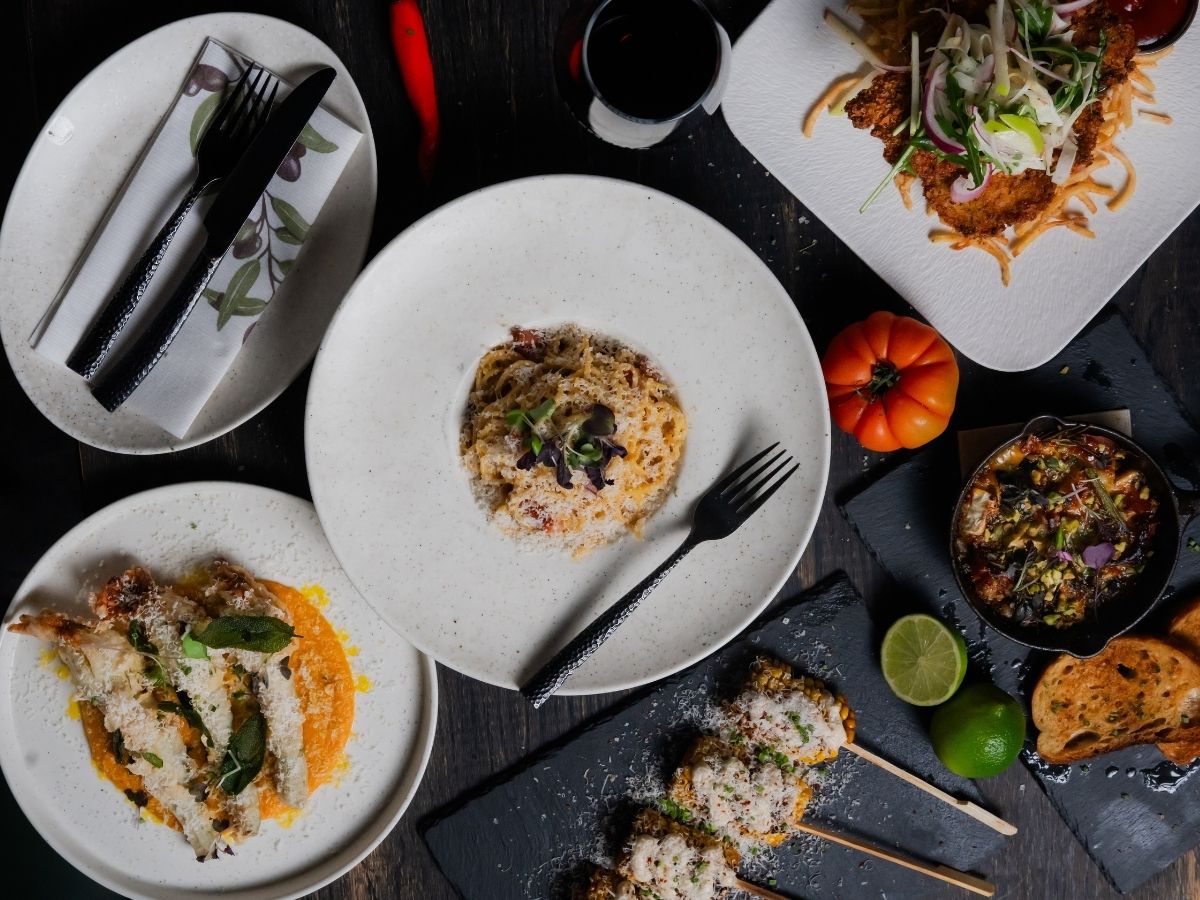
Tomato-based pasta, pizza, parmigiana, lasagne and hard Italian cheeses.
How to serve it
Serve slightly below room temperature, around 14 to 18°C. Lighter reds sit at the cooler end, fuller reds at the warmer end.
Worth knowing
Vino Nobile di Montepulciano is made from sangiovese, not the montepulciano grape. The name comes from the Tuscan town.
Check the menu at your venue
Wine lists change with the season and the supplier, and each venue pours its own. Check the menu before you go, or ask your waiter what is open by the glass.
Want to browse other types of wine?
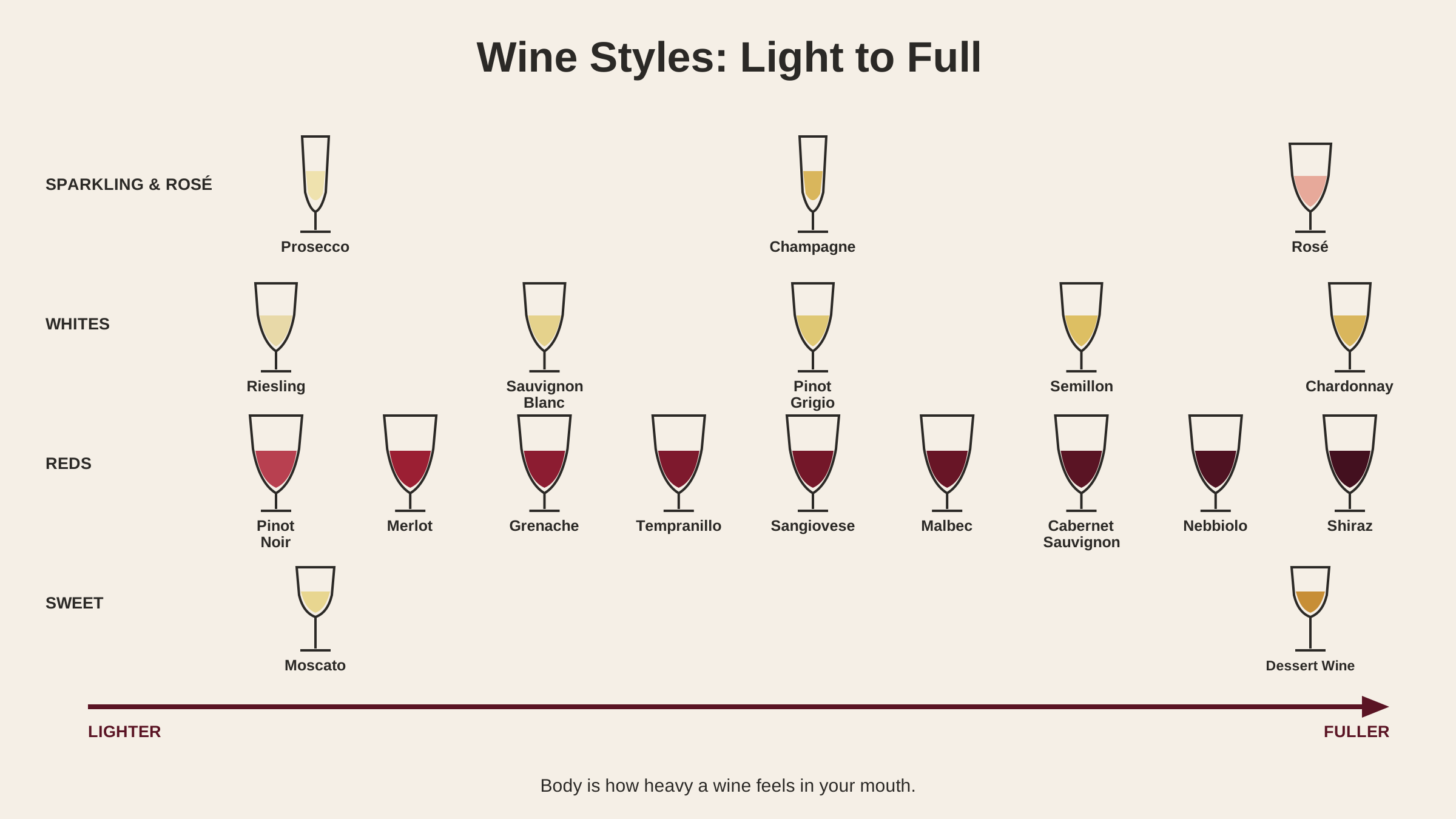
Tap any glass to jump to that wine, or go back to the full wine guide.
Frequently asked
What does Sangiovese taste like?
Sour cherry, tomato leaf, dried herbs. Body: medium. Tannin: medium. Acidity: very high.
Where does Sangiovese come from?
Sangiovese is Italy’s most planted red grape and the heart of Tuscany. Chianti, Brunello di Montalcino and Vino Nobile di Montepulciano are all made from it. Australian plantings include the King Valley and McLaren Vale.
What food goes with
Tomato-based pasta, pizza, parmigiana, lasagne and hard Italian cheeses.
How should Sangiovese be served?
Serve slightly below room temperature, around 14 to 18°C. Lighter reds sit at the cooler end, fuller reds at the warmer end.